WordPress or Custom Website? Honest Advice (With Prices)
The short answer
No time to read the full article? Here is the core.
Choose WordPress if you need a blog or simple informational site, have a budget under €1,500, and have no specific technical requirements. WordPress is a solid platform for standard needs.
Choose custom if you run an online store, your website needs to integrate with other systems (inventory, accounting, CRM), speed and discoverability are crucial to your revenue, or you want to automate business processes. Custom builds exactly what your business needs, without the limitations of plugins and templates.
Want to know which option fits your specific situation? Request a free consultation and get honest advice within 48 hours, regardless of whether you end up working with us.
| Criteria | WordPress | Custom |
|---|---|---|
| Load speed | 3-5 seconds (plugins slow it down) | Under 1.5 seconds |
| Security | Vulnerable (15-30 plugins = 15-30 risks) | Robust (no third-party plugins) |
| SEO control | Limited (via plugins like Yoast) | Fully baked into the architecture |
| AI discoverability | Minimal | Full (structured data, clean code) |
| Scalability | Limited at scale | Unlimited, grows with your business |
| Automation | Limited to available plugins | Custom-built workflows |
| Data ownership | Shared with plugins and themes | 100% yours |
| Year 1 cost | €1,500 - €5,000 | Scales with scope, project-based |
| 3-year cost | €4,500 - €11,000 (incl. maintenance, plugins, patches) | Meaningfully lower at comparable scope (no plugin stacking) |
What does it really cost? The full bill over 3 years
This is the question everyone asks but almost no agency answers honestly. Let us do the math.
WordPress (professionally set up) is a stack of line items that add up to the real price:
- Initial: €1,500 to €5,000 (theme, setup, core plugins) - Hosting: €10 to €50 per month - Plugins (premium): €200 to €1,000 per year - Maintenance and updates: €50 to €150 per month - Security patches: ongoing, every plugin separately
Over 3 years, that adds up: for an average business site, €4,500 to €11,000, excluding the hours you or your team spend on manual work.
A custom website works differently. One project price that fits what we build for your business, and one flat monthly fee covering hosting, client portal, and maintenance. No plugin costs, no theme licenses, no separate security patches. For projects of comparable scope, the 3-year total lands meaningfully lower than WordPress, and that does not even account for the hidden costs of WordPress: the site that needs rebuilding after 2 years because it has become too slow, the hack that costs €3,000 to €10,000 in recovery, or the customers lost to a site that loads in 4 seconds while your competitor loads in 1.
At Nurani, the investment scales with the scope of your project. A simple website is a different conversation from a webshop with automations and business-specific modules. We use AI to listen deeper and build more efficiently, not to cut corners.
When WordPress is the right choice
We build custom websites. Yet we say honestly: WordPress is sometimes simply the better choice. Here is when.
You run a blog or content platform. WordPress was literally built as a blogging platform. For websites where content is the core and technical requirements are limited, it does exactly what it needs to do.
Your budget is under €1,500. With a premium theme and a few plugins, you have a functional website at a low price. It is a template also used by thousands of other sites, but if that is not a problem, it is a reasonable solution.
You need a simple informational site. Five to ten pages, a contact form, maybe a blog. No integrations, no online store, no specific workflows. WordPress handles this just fine.
The common thread: WordPress works for standard needs. The moment your business has specific requirements, it starts to struggle.
When custom is the better investment
At what point do you outgrow a template? Sooner than you think. And the difference is not just about how the site looks, but what it does for your business.
Automated workflows that save you hours of work.
This is where custom truly pays off. One of our clients, Albendo, sells over 5,000 products in their tile webshop. With WordPress and WooCommerce, someone would need to manually check stock with the supplier, update prices, and track product status. Every single day.
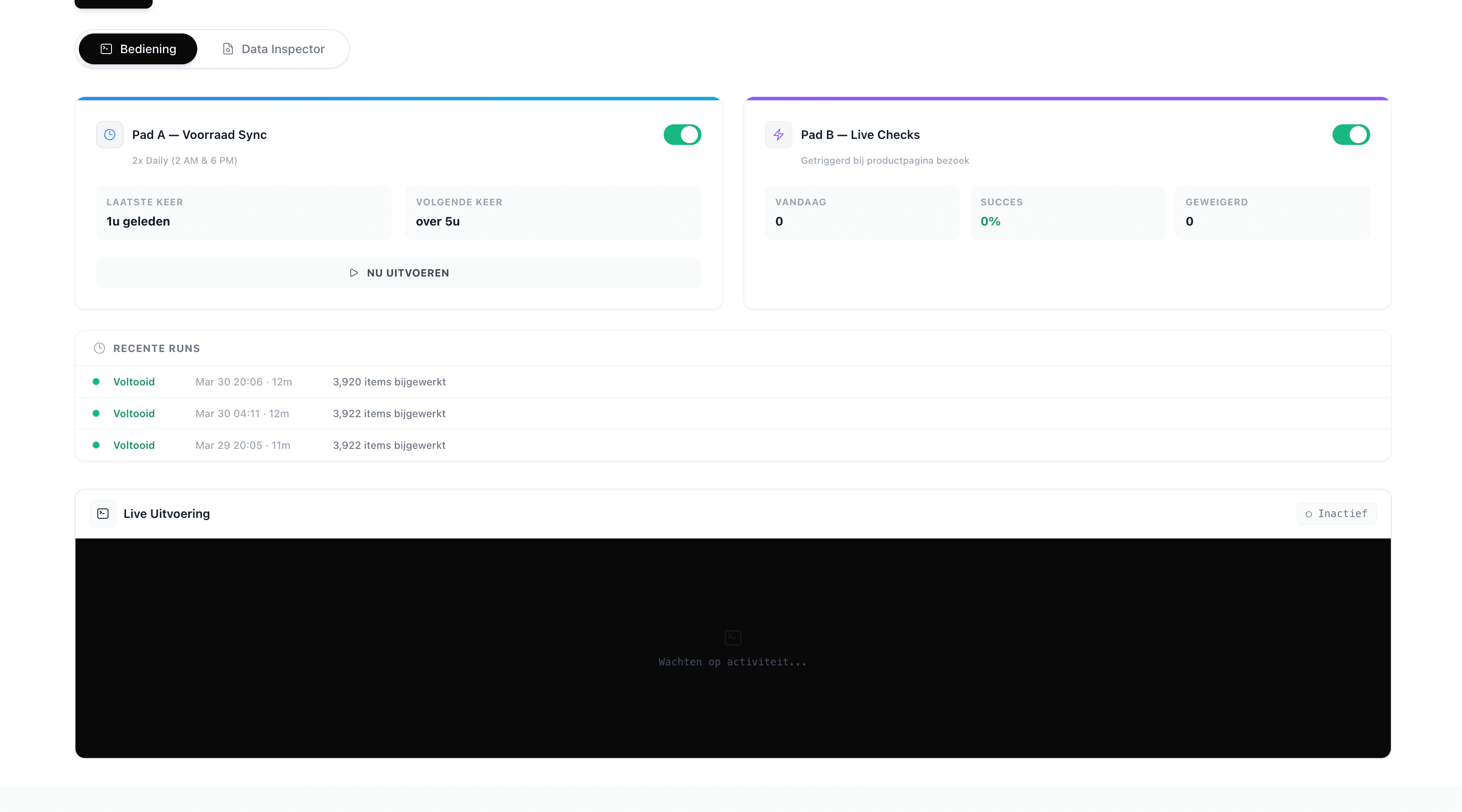
With their custom webshop, this runs entirely automatically. An automated sync pulls inventory and prices from the supplier daily. Products that go out of stock are automatically flagged. New products appear in the right category on their own. This saves not hours per week, but hours per day.
Integrations that match how you work.
For Windmills Sports, a sports recruitment agency, we built an athlete management system. Scouts can browse profiles, universities can connect, and the team manages everything from a single portal. Try doing that with WordPress plugins.
For Evelyne Fontaine, a content creator with an international audience, we built a platform with a visual editor that automatically translates to four languages. She manages 50+ brand collaborations, group trips, and a travel calendar from one dashboard. No WordPress theme offers this.
Speed that makes you money.
WordPress sites load in an average of 3 to 5 seconds. Our custom websites load in under 1.5 seconds. That difference sounds small, but more than half of your mobile visitors leave if it takes longer than 3 seconds. Google penalizes slow sites in search results. Speed is not a luxury, it is revenue.
Want to know what custom could mean for your business? Request a free strategy report. Within 48 hours you will know exactly what the possibilities are.
The security problem nobody mentions
The vast majority of all hacked websites on the internet run on WordPress. That is not an opinion, it is a statistic. The reason is simple: every plugin is written by a different developer, with a different quality standard, and a different update schedule.
With 15 to 30 plugins on an average business site, you have 15 to 30 potential open doors for hackers. Every unupdated plugin is a vulnerability. It is not a question of if you get hacked, but when, unless you actively invest in maintenance.
What does a hacked website cost? On average €3,000 to €10,000 in recovery costs. But the real damage is reputational. When your customers see a Google warning on your site, you have lost that customer. Permanently.
With a custom website, these risks do not exist to the same degree. There are no third-party plugins with unknown code. The attack surface is a fraction of WordPress. And maintenance is simpler because there are fewer moving parts.
What if you already have a WordPress site?
Many business owners who come to us already have a WordPress site. The question is: start over or keep struggling?
Switching from WordPress to custom is a complete rebuild. Your content (text, images) can be migrated, but the design and functionality are rebuilt from scratch. That sounds drastic, and it is.
But consider this: if your current site is costing you customers through slow load times, poor discoverability, or security issues, you are already paying those costs. Every month. The rebuild is a one-time investment that eliminates those ongoing costs.
A concrete sign it is time to switch: you are paying more on WordPress maintenance, plugins, and fixes than the monthly cost of a custom solution. Or you have already been hacked. Or your agency cannot build the functionality you need within WordPress.
At Nurani, we help you make that assessment. Honestly. If your WordPress site works fine, we will tell you that too.
The option nobody discusses: modern custom
Most comparisons online frame this as a binary choice: WordPress or traditional custom. But there is a third option that is increasingly relevant in 2026.
Modern custom websites are built with frameworks like Next.js, the same framework used by Nike, Netflix, and Notion. This technology combines the best of both worlds: the speed and security of custom, with the flexibility of a CMS that lets you edit content yourself.
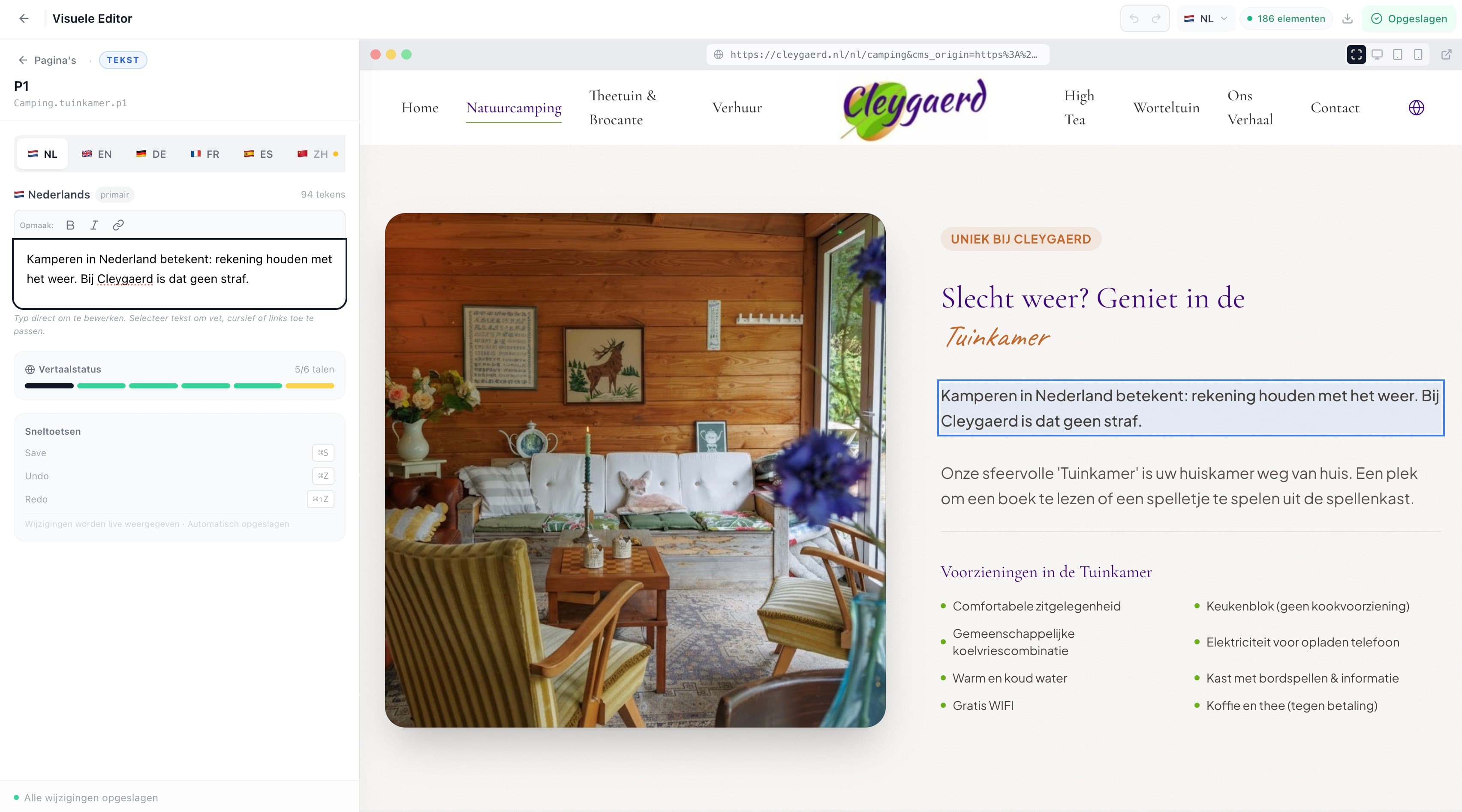
At Nurani, you get a visual CMS in your client portal where you can edit text, images, and content without any technical knowledge. You see your changes in real time. It is simpler than the WordPress dashboard, because it is built specifically for your website.
Additionally, modern custom offers something WordPress simply cannot: full control over how AI systems read your website. In 2026, more and more people search through AI assistants. A custom site with the right structured data gets cited by AI. A WordPress site with twenty plugins is barely decipherable for AI systems.
Which option fits your business? (Decision framework)
No more generic advice. Use this framework to make the choice that fits your situation.
Choose WordPress if you meet ALL of these conditions:
- Your budget is under €1,500 - You need a simple informational site or blog (5-10 pages) - You do not need integrations with other systems - You do not have an online store, or have fewer than 50 products - You are willing to regularly maintain updates and plugins yourself
Choose custom if you meet ONE or more of these conditions:
- You run an online store with more than 50 products - Your website needs to integrate with other systems (inventory, accounting, CRM, suppliers) - You want to automate business processes through your website - Speed and discoverability are crucial to your revenue - You want to stand out from competitors using the same templates - You have already been hacked or are paying more than €200/month on WordPress maintenance
At Nurani, we build custom solutions for businesses that need more than a template. But if a template solves your problem, we will tell you honestly. The first step costs you nothing: request a free strategy report and get honest advice on which option is the best fit for your situation.
Frequently asked questions
What does a custom website cost in 2026?
The price of a custom website depends on scope: a simple professional site is a different conversation from a webshop with automations and integrations. At Nurani, we work project-based with a flat monthly fee for hosting and your client portal. For comparison: a professionally set up WordPress site costs €4,500 to €11,000 over 3 years, including plugins, patches, and maintenance, and that still does not include any business-specific automation. Custom at comparable functionality is often cheaper over 3 years, especially because you are not stacking plugin licenses.
Is WordPress suitable for a professional website?
Yes, for standard needs. If you need a blog, informational site, or simple portfolio, WordPress does the job just fine. But as soon as you have specific requirements like integrations with other systems, automated workflows, or an online store with many products, you run into the limitations of plugins and templates.
Can I switch from WordPress to custom?
Yes, but it is a complete rebuild. Your content can be migrated, but the design and functionality are rebuilt from scratch. The investment pays off if your current WordPress site is costing you customers through slow load times, security issues, or limited functionality. At Nurani, we help you make that assessment honestly.
Can I edit content myself on a custom site?
Yes. At Nurani, you get a visual CMS in your client portal where you can edit text, images, and content without any technical knowledge. You see your changes in real time. It is simpler than the WordPress dashboard, because it is built specifically for your website.
How long does it take to build a custom site?
Most websites are live within 2 to 3 weeks. Webshops take 3 to 4 weeks. At Nurani, you see the full concept before we build it, so you know exactly what you are getting before the build process begins.
Curious what this means for your business? On a free strategy call we map out exactly where your opportunities lie.
Book a free strategy call